Before You Put a Number in the Title, Check What It Commits You To
Here is the sequence almost everyone follows. Script the video. Shoot it. Edit it. Then, at the very end, sit down to write the title and decide a number would help. Seven feels good. Type “7”, publish, move on.
The problem is that the number was never a packaging decision. It was a production decision, and you have just made it several weeks too late. I have been building YouTube channels since 2017, mostly faceless channels aimed at English-speaking audiences, and this is one of the few packaging habits I would actually rearrange the workflow to fix. Numbers in YouTube titles are not decoration you add at the end. They are a commitment the edit either honours or fails.
A Number Is a Structure, Not a Decoration
The moment a digit appears in your title, the viewer is holding a mental checklist. They know roughly how the video will be shaped, roughly how long it should take, and roughly what a complete version looks like. They will notice if the fifth item was thinner than the first.
That is the trade. A number makes a title easier to parse at a glance and gives the viewer a reason to believe the video has a shape. In exchange, you have told them what shape, and they will check.
Nothing about this is unique to lists, either. A number sets an expectation about density — how much value arrives per minute — and density is the single thing that decides whether people are still there in the second half.
Three Bands, Three Different Videos
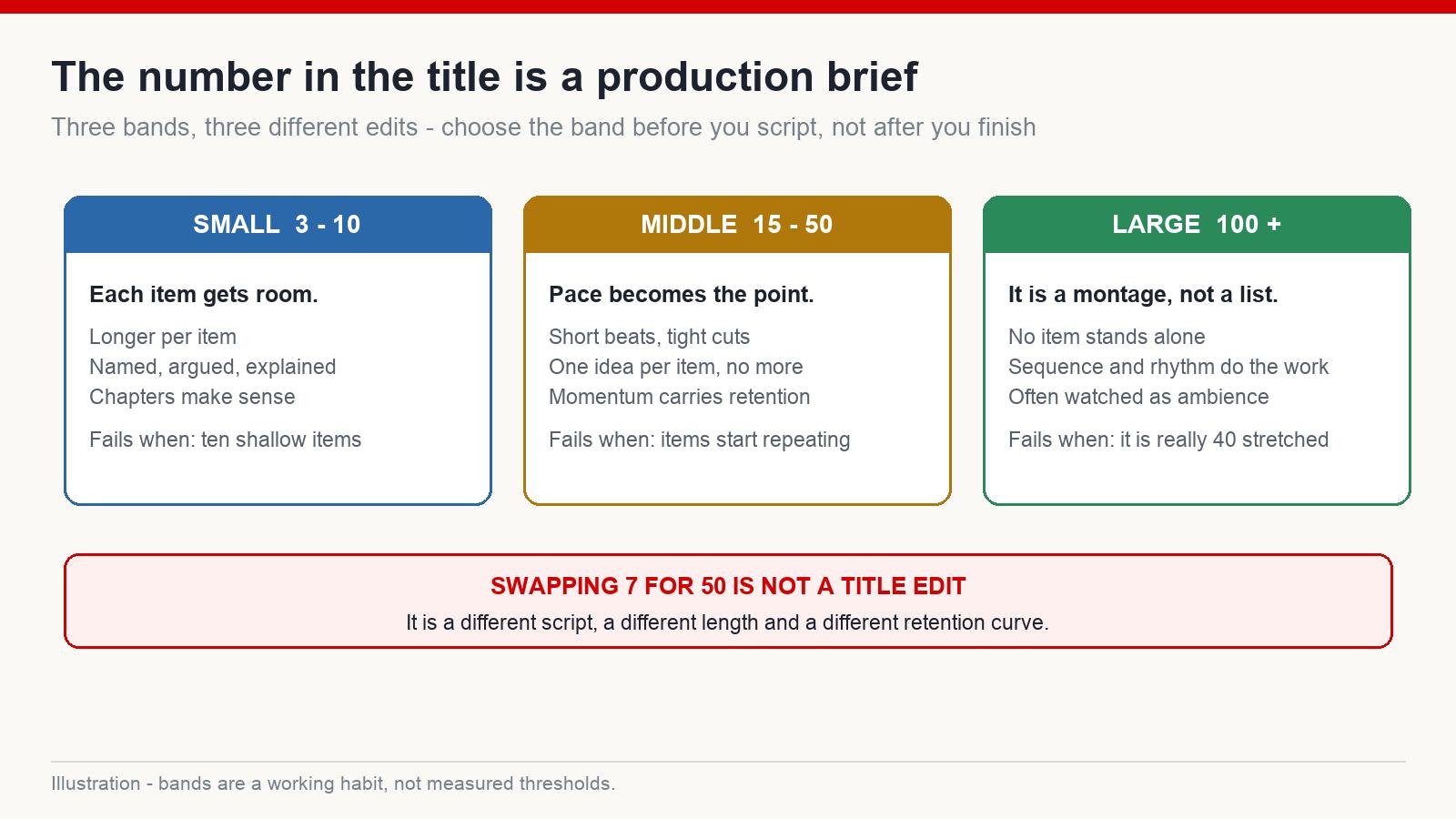
I think of the choice as three bands, and swapping between them is not a title edit. It is a different video.
Small: three to ten
Each item gets room. You can name it, argue it, give an example, and let chapters do real work. This band suits instructional and analytical content where the viewer came for depth. It fails in a specific way: ten shallow items feel worse than four deep ones, because the viewer notices the shallowness item by item.
Middle: fifteen to fifty
Pace becomes the point. One idea per item, short beats, tight cuts, no lingering. The momentum carries retention rather than any individual item. This band fails when items start repeating each other — and at this length they will, unless you actually had that many distinct things to say.
Large: a hundred or more
At this scale it is a montage rather than a list. No single item stands alone; sequence and rhythm do the work, and viewers often use it as ambience rather than watching attentively. This band fails when it is really forty items stretched to fill the promise.
Read those three descriptions and notice how little they have in common. Different lengths, different pacing, different retention curves, different thumbnails. That is why the number belongs at the top of the process.
Pick the Band Before You Script
The practical change is small. Before you script, decide which band the video is in and let the structure follow. Not “I will make a video about editing mistakes and add a number later,” but “this is a five-item video, so each item needs a name, a reason and an example, and it will run about this long.”
When the number leads, the edit has an obvious spine and the title writes itself. When the number is retrofitted, you spend the last hour of editing quietly wondering whether item six counts.
Round Reads Faster Than Clever
A tempting mistake in the other direction: reaching for an unusual number to seem precise. 427. 891. 2,743.
Familiar numbers get read at a glance — 5, 10, 50, 100 — while unusual ones make the eye stop and process, which is not the same as making it stop and want. Precision is worth it only when the exact figure is itself the story, as in a video about a count you genuinely ran. Otherwise the round number is doing the same job with less friction.
Where the Digit Sits
Early. A number in the first few words is visible before any layout can truncate the line, and it gives the eye something to land on immediately.
That does create tension with the other rule about title openings — that the subject phrase your audience would search for should also sit near the front. In practice they coexist happily, because the digit is short. “7 Editing Mistakes That Cost You Viewers” puts the number first and the subject immediately after. What does not work is holding the number back to the end, where it functions as a footnote rather than an anchor.
The Count Has to Be Real
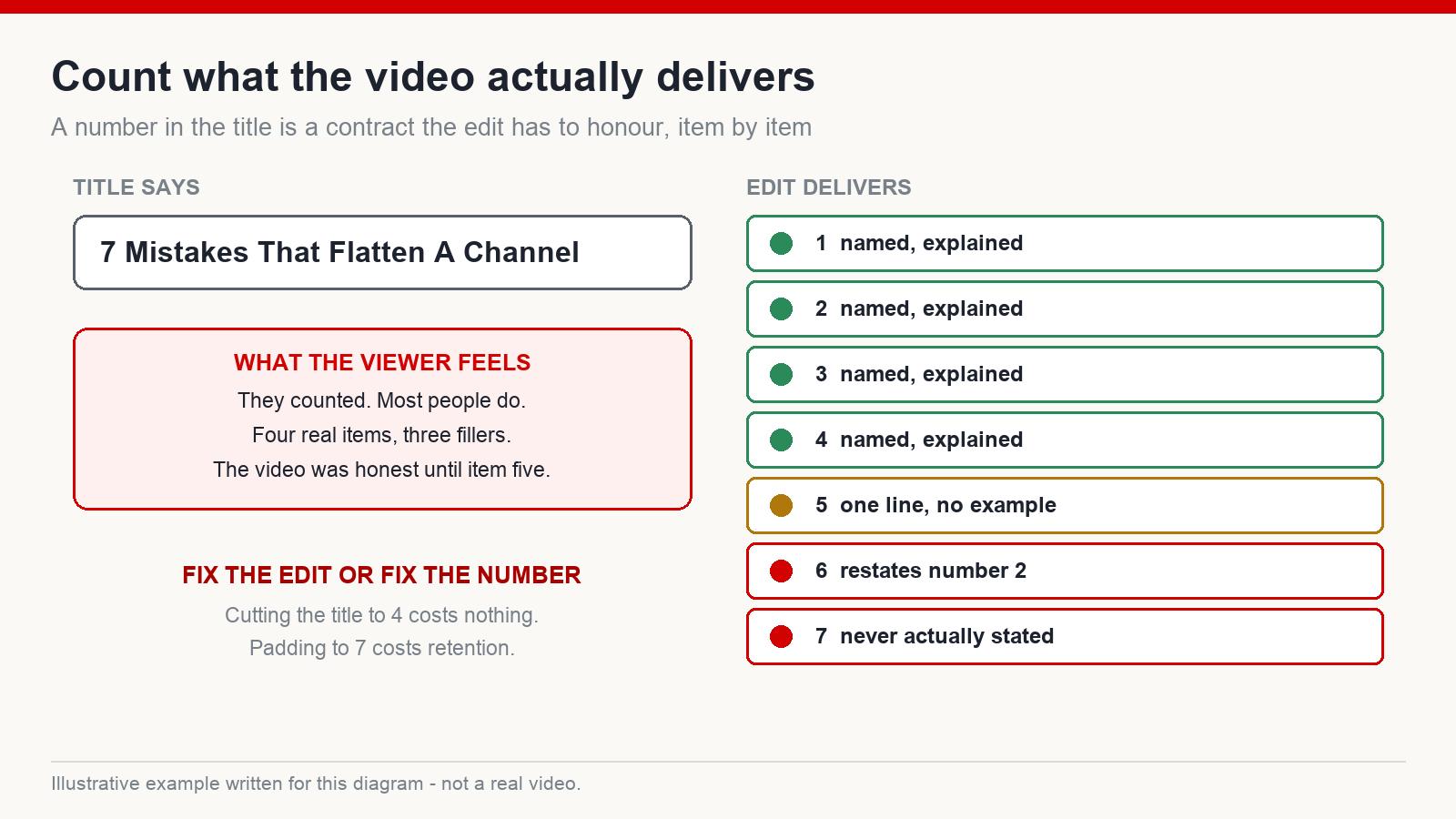
Before publishing, count what the edit delivers. Not what the outline said — what a viewer would count if they were keeping score, which some of them are.
The common failure looks like this: four items are named and explained properly, the fifth gets one sentence, the sixth restates the second in different words, and the seventh never really gets stated at all. The title said seven. The video delivered four. Nobody writes an angry comment about it; they simply stop watching around the point where the padding starts, and that shows up in your retention graph as a slope you cannot explain.
When the count and the edit disagree, fixing the title is nearly free. Changing “7” to “4” costs you nothing except a slightly less satisfying digit. Padding the edit to reach seven costs you the second half of the video.
When to Leave the Number Out
Not every video wants one. A number tells the viewer the video is enumerable, and some of your best videos are not: a single story, one argument developed over fifteen minutes, one process shown end to end. Bolting a count onto those fragments them for no gain.
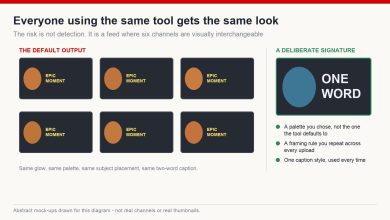
If a channel publishes nothing but numbered titles, the shelf also starts to read as one repeated format, which slowly costs you the variety that makes a catalogue interesting. Use it when the content is genuinely a list. Leave it out when it is not.
The Short Version
Choose the number before you script, because it sets the length, the pacing and the density of the whole video. Prefer round numbers unless the exact figure is the story. Put it near the front. Then count what the edit actually delivers and make the title match the smaller of the two.
Judge the result against the median of your own last ten uploads rather than any benchmark from elsewhere, and read the click rate alongside retention — a number that lifts clicks while the retention curve sags has cost you more than it earned. Results vary by niche and format.
If you want the full workflow around packaging and the production system behind it, that is what we work through at mmoyoutube.com.
FAQ
Should I decide the number before or after editing?
Before scripting. The number determines how much room each item gets, so deciding it at the end means retrofitting a promise onto a video that was not built for it.
Is a bigger number always more attractive?
No. A bigger number is a bigger commitment. It only helps when the content genuinely operates at that scale; otherwise it reads as padded within a few minutes.
What if the video ends up with fewer items than the title says?
Change the title. It is the cheapest fix available and it protects the half of the video most viewers never reach.
Can a number make a weak video perform?
It can improve the odds of a click. It cannot make anyone stay, and staying is what determines whether the video keeps being shown.